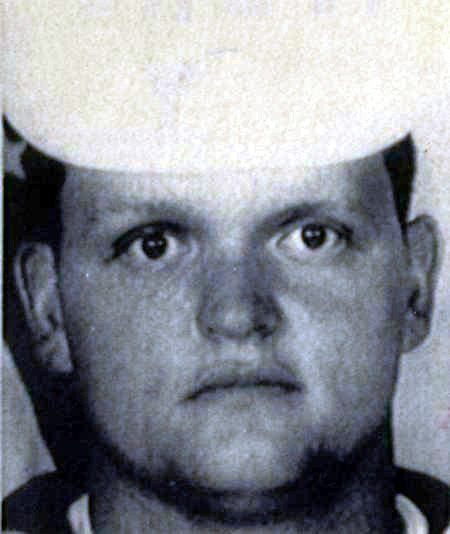
Joseph Pearce Watson
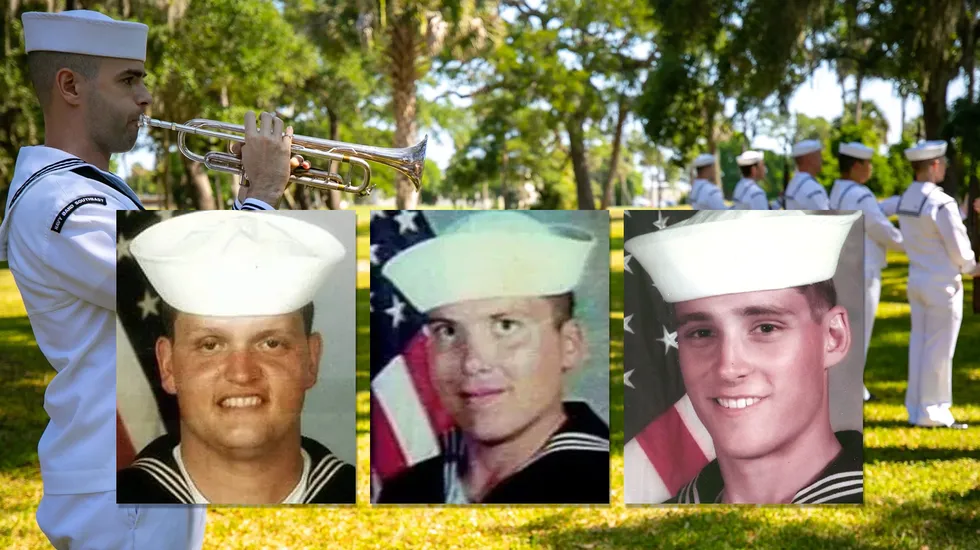
Electronics Warfare Technician, Third Class
United States Navy
November 25, 1961 – May 17, 1987
Age – 25
Ferndale, MI
Persian Gulf
Middle East Task Force
Mayport Naval Station, Florida
Killed aboard the USS Stark (FFG-31) when the ship was struck
by two Iraqi Exocet missiles during a nighttime patrol in the Persian Gulf
A 1979 graduate of Ferndale High School, Watson studied engineering for two years at Michigan State University. He dropped out and joined the Navy in 1983. His enlistment would have been up April 8, 1989. When the Stark visited Detroit in June 1985 as part of the annual Detroit-Windsor, Ontario, Freedom Festival, Watson and Kristin Valentine were married.
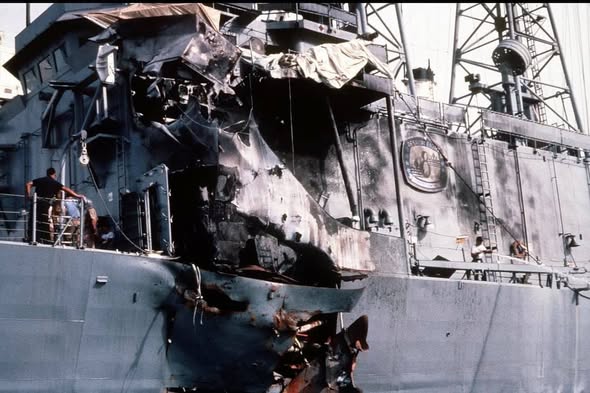
On May 17, he was assigned to the USS Stark in the Persian gulf when an attack occurred just after the lights-out call, with many crewmembers in their bunks on a ship that was halfway through a six-month deployment in the Persian Gulf. The first Exocet ripped through the barbershop, post office and part of the chief petty officers’ quarters. The resulting fire was so hot it melted bulkheads.
The second missile detonated, leading to catastrophic fires and significant destruction within the ship, particularly in crew quarters and operational areas. The crew fought valiantly to control the fires and stabilize the ship, ultimately preventing it from sinking.
The USS Stark was part of the Middle East Task Force assigned to patrol off the Saudi Arabian coast near the Iran–Iraq War exclusion boundary.
The United States Central Command identified the attacking aircraft as an Iraqi Dassault Mirage F1 fighter, but the F1EQ-5 variant of the Mirage F1 operated by Iraq was capable of carrying only one Exocet. Later reports asserted that the attacking aircraft was a Falcon 50 business jet which had been modified with a radar and missile hardpoints to carry two AM-39 Exocet missiles for anti-shipping operations. Iraq had used modified Falcon jets in civilian markings to conduct covert photographic reconnaissance in the Persian Gulf to avoid attracting suspicion.
Initially not alarmed, at 22:09 Stark Captain Glenn R. Brindel ordered a radioman to send the message: “Unknown aircraft, this is U.S. Navy warship on your 078 (degrees) for twelve miles. Request you identify yourself”. The pilot did not respond to the message. The ship’s captain ordered a second message sent, to which there was no reply. At 22:10 Brindel was informed the aircraft had targeted the ship, locking his Cyrano-IV fire-control radar onto the Stark. The aircraft fired the first Exocet missile 22 mi (35 km) from the ship, and the second from 15 mi (24 km), after which the pilot banked left and began to withdraw.
Stark’s search radar, ESM and CIWS systems failed to detect the incoming missiles. The first Exocet missile struck the port side of the ship near the bridge. Although it failed to detonate, rocket fuel ignited and caused a large fire that quickly spread throughout the ship’s post office, storeroom and the combat operations center (where the ship’s weapons are controlled).
The second Exocet also struck the port side, 30 seconds later. This missile detonated, leaving a 10 by 15 ft (3.0 by 4.6 m) hole in the frigate’s left side. Electronics for Stark’s Standard Missile defense went out and Brindel could not order his men to return fire. An AWACS plane was still in the area and just after witnessing the attack, radioed a nearby Saudi Arabian airbase to send aircraft for an interception but the ground controllers did not have the authority to order a sortie and the jet left unchallenged. The US Navy’s rules of engagement allowed Stark to defend herself after sufficiently warning the hostile aircraft.
Brindel ordered the starboard side flooded to keep the hole on the hull’s port side above water. This helped prevent the Stark from sinking. Brindel quickly dispatched a distress call after the first missile hit. It was received by USS Waddell, which was in the area and USS Conyngham with two-thirds of its crew on liberty in Bahrain. Waddell and Conyngham arrived to provide damage control and relief to the Stark’s crew. According to the Pentagon, an Iranian helicopter joined a Saudi Arabian vessel to aid in rescue operations.
A total of 37 crew were killed in the attack, 29 from the initial explosion and fire, including two lost at sea. Eight later died from their injuries. Twenty-one others survived their wounds.