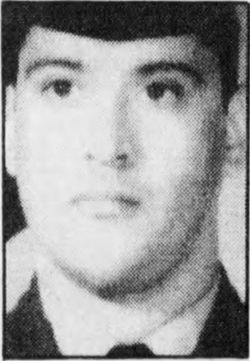
Ricardo (Rick) Guerra
Specialist, United States Army
May 7, 1961 – December 12, 1985
Age – 24
Highland Park, MI
3rd Battalion, 502nd Infantry Regiment, (Task Force 3-02),
101st Airborne Division (Air Assault),
Fort Campbell, KY
Died in a plane crash along with 247 other soldiers and 8 crew members in Canada travelling home for Christmas.
Rick Guerra of the 101st Airborne Division had been deployed to the Sinai Peninsula. Their mission was to serve with the Multinational Force and Observers, a group that was established to enforce the terms of a peace treaty between Egypt and Israel the two nations reached in 1979 following the signing of the Camp David Accords the year prior.
Flight 1285R took off from Cairo, Egypt at 8:35 PM on December 11, 1985. The trip back to the United States was intended to continue into the next day, with refueling stops in Cologne, West Germany and Gander, Newfoundland, Canada. The DC-8 arrived in Cologne at 1:21 AM and left just over an hour later with a new flight crew of eight.
At 9:04 AM, they arrived at Gander International Airport, where those onboard the plane disembarked while it was refueled and underwent an external inspection. At 10:15 AM, it took off down runway 22, hitting the air at 192 MPH. According to witnesses, the DC-8 appeared to experience difficulties during takeoff.
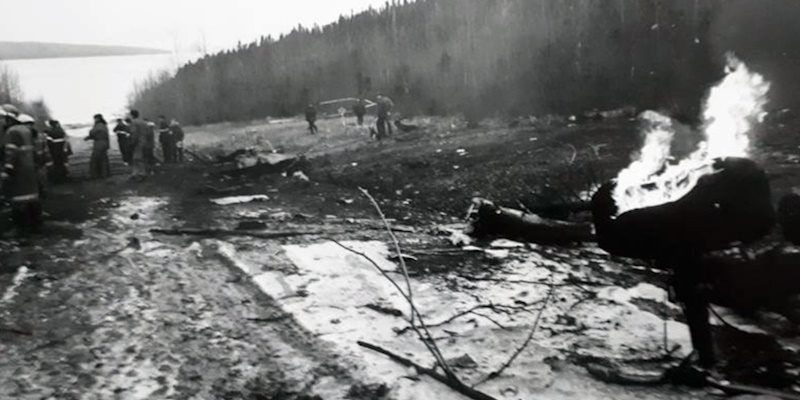
After hitting 198 MPH, the plane started to descend and was seen crossing the Trans-Canada Highway at a very low altitude. When interviewed after the crash, witnesses reported seeing a bright glow coming from the DC-8 before it struck the ground near Gander Lake, after which it broke up and burst into flames. The blaze was even more intense due to the extra amount of fuel the aircraft had taken on.
Everyone onboard the plane, including the members of the 101st Airborne, perished in the crash. To this day, the death toll is still the highest of any plane crash to occur in Canada and is the single deadliest air incident to involve the US Army during peacetime.
Immediately following the plane crash, the Canadian Aviation Safety Board (CASB) sent a response team to gather evidence that would aid them in figuring out what happened. At the end of the investigation, five out of nine board members concluded that during the DC-8’s approach to Gander, conditions were favorable for the formation of ice on the aircraft’s wings. It continued to be exposed to freezing precipitation upon landing and hadn’t been de-iced prior to taking off for Kentucky.
While the members weren’t able to determine the sequence of events that led to the crash, they wrote in their report that “the weight of evidence supports the conclusion that, shortly after lift-off, the aircraft experienced an increase in drag and reduction in lift that resulted in a stall at low altitude from which recovery was not possible.” They went on to say that the cause of the stall was ice contamination on the upper portion of the DC-8’s wings.
Four members of the CASB disagreed, speculating “an in-flight fire that may have resulted from detonations of undetermined origin brought about catastrophic system failures” and downed the plane. They also noted inadequacies with the data recovered. Judge Willard Estey of the Supreme Court of Canada ruled that the available evidence didn’t support either conclusion, the fallout for which resulted in the closure of the CASB and the establishment of the Transportation Safety Board of Canada.
A few days after the plane crash, US President Ronald Reagan and First Lady Nancy Reagan visited Fort Campbell to comfort members of the 101st Airborne and the families of those who’d perished. Speaking before the group, he said, “Some people think of members of the military as only warriors, fierce in the martial expertise, but the men and women we mourn today were peacemakers. They were there to protect life and preserve peace, to act as a force for stability and hope and trust.”
On the day of the crash, an anonymous caller telephoned a French news agency in Beirut and claimed responsibility on behalf of the Islamic Jihad Organization. However, this was dismissed by both the Canadian and US governments.
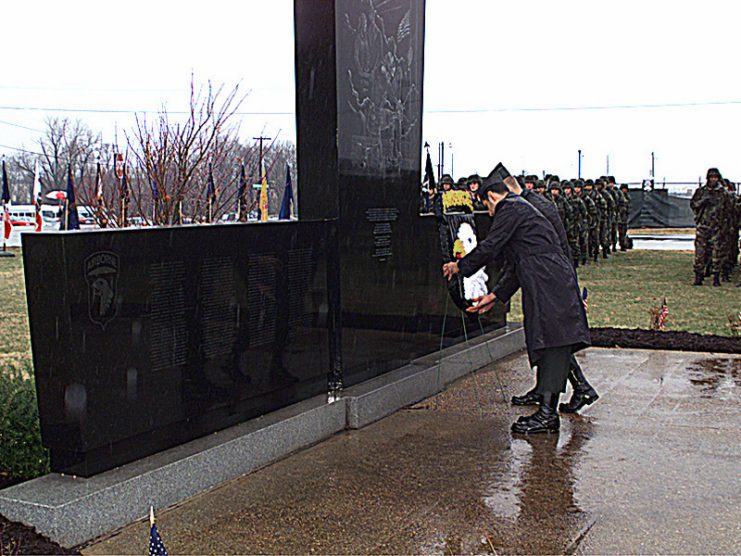
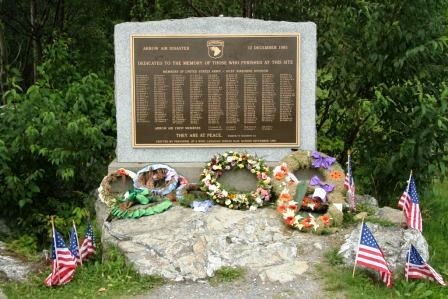
Following the recovery period, the bodies of the fallen were repatriated to the US, escorted by their comrades in the 101st Airborne. Since the plane crash, a number of memorials have been erected to honor the victims, including one overlooking Gander Lake and another at Fort Campbell. A Memorial Park also opened in Hopkinsville, Kentucky.